The Three Croatian Dialects: Kaj, Ča, or Što?

Updated: May 10
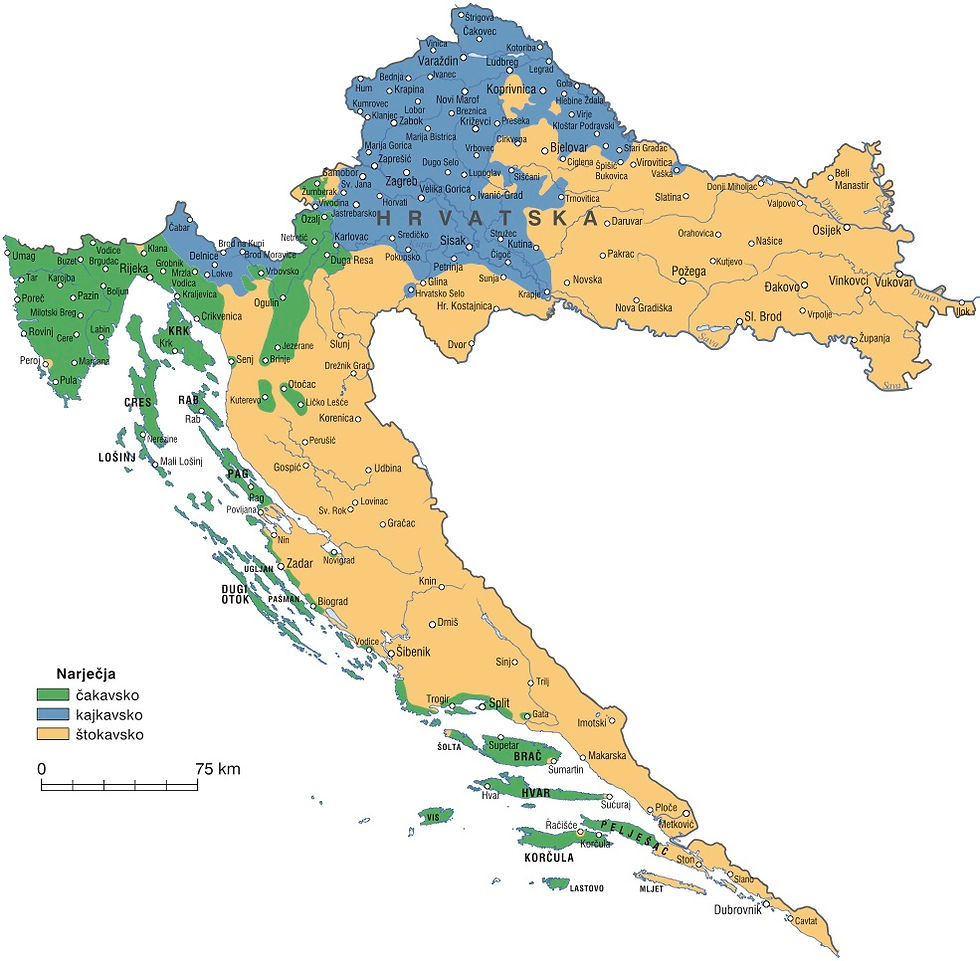
If you travel across Croatia, you might notice something curious: people don’t always say the same word for “what.” In some places you’ll hear kaj, elsewhere ča, and in most of the country što (or šta).
This simple difference reveals one of the most important facts about Croatian: it has three main dialect groups.
Kajkavian (kajkavsko narječje)
Kajkavian is spoken in northwestern Croatia, especially around Zagreb, Zagorje, Međimurje, Podravina, and parts of Prigorje.
As the name suggests, speakers typically ask:
Kaj? (“What?”)
Kajkavian often sounds quite different from Standard Croatian and contains many loanwords from German due to historical ties with Central Europe.
Typical Kajkavian examples:
Kaj delaš? → What are you doing?
Kak si? → How are you?
Bum došel. → I will come.
Nemrem. → I can’t.
Phonetically, Kajkavian is often Ekavian, for example:
mleko (standard: mlijeko)
reč (standard: riječ)
Chakavian (čakavsko narječje)
Chakavian is spoken mainly along the Adriatic coast — in Istria, Kvarner, the Croatian Littoral, and on reminders of Dalmatian islands.
Here, the key word is:
Ča?
Chakavian varies greatly from island to island and preserves many old Slavic features. Because of centuries of contact with Venice and Italy, it also includes many Romance loanwords.
Typical Chakavian examples:
Ča delaš? → What are you doing?
Di si? → Where are you?
Gren doma. → I’m going home.
Ča ćeš učinit? → What will you do?
Chakavian is most often Ikavian:
mliko (standard: mlijeko)
rič (standard: riječ)
dite (standard: dijete)
Shtokavian (štokavsko narječje)
Shtokavian covers most of Croatia (Slavonia, Baranja, Lika, and much of Dalmatia) and forms the basis of Standard Croatian.
Speakers ask:
Što? or Šta?
If you learn Standard Croatian, you are essentially learning a Neo-Shtokavian variety.
Typical Shtokavian examples:
Što radiš? → What are you doing?
Gdje ideš? → Where are you going?
Ne mogu. → I can’t.
Doći ću. → I will come.
Standard Croatian uses mostly Ijekavian forms:
mlijeko
riječ
dijete
bijelo


